
Hmas Otama
HMAS Otama (SS 62/SSG 62) was an Oberon-class submarine built in Scotland for the Royal Australian Navy (RAN). Commissioned in 1978, she was the final vessel of her class to enter service. Notably, Otama operated as a specialist submarine and one of two secret “Mystery Boats.” Equipped with advanced electronic surveillance gear, she gathered vital intelligence on the Soviet Pacific Fleet and Chinese Navy ships, while also conducting highly classified coastal operations across Asia.
HMAS Otama (SS 62/SSG 62) was an Oberon-class submarine built in Scotland for the Royal Australian Navy (RAN). Commissioned in 1978, she was the final vessel of her class to enter service. Notably, Otama operated as a specialist submarine and one of two secret “Mystery Boats.” Equipped with advanced electronic surveillance gear, she gathered vital intelligence on the Soviet Pacific Fleet and Chinese Navy ships, while also conducting highly classified coastal operations across Asia.
The Active Service of HMAS Otama
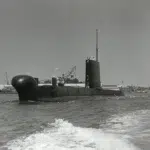
Built in Scotland by Scotts Shipbuilding and Engineering Company, HMAS Otama was commissioned into the Royal Australian Navy (RAN) in 1978 as its final Oberon-class submarine. As one of two specialized “Mystery Boats,” Otama was fitted with advanced electronic surveillance systems to monitor Soviet Pacific Fleet and Chinese naval movements during the Cold War.
Beyond covert operations, she participated in the RAN’s largest postwar Indian Ocean exercise in 1980 and underwent a major mid-life modernization from 1983 to 1985. Tragedy struck on August 3, 1987, off New South Wales when Otama accidentally submerged while two sailors were stowing gear inside the fin, killing both men. Despite the loss, she remained essential; technical delays with the replacement Collins-class submarines forced the Navy to repeatedly extend her service until late 2000.
The Battle to Save the Submarine
Following her December 2000 decommissioning, the Western Port Oberon Association purchased Otama in 2001 to anchor the proposed Victorian Maritime Centre. However, securing local planning permits on the Mornington Peninsula proved difficult. Blocked by administrative rejections and mounting upkeep costs, the association listed the submarine on eBay in late 2008—a viral attempt that generated international news, but no sale.
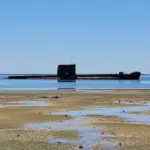
Although local authorities approved a land site near Hastings’ Western Port Marina in 2013, bureaucratic delays stalled final permits. Left anchored offshore for nearly two decades, the hull steadily decayed. Unable to bring her ashore, the preservation campaign collapsed. Otama was ultimately sold for scrap and towed to Western Australia, ending the fight to save the historic vessel.
The Battle for Preservation
Following her decommissioning, HMAS Otama became the subject of a highly publicized, decades-long campaign to rescue her from the scrapyard:
2001: The Western Port Oberon Association purchased the submarine, intending to turn her into the centerpiece of the proposed Victorian Maritime Centre on the Mornington Peninsula.
2008: Stalled by local government resistance and unresolved permits, the association made global headlines by listing the submarine for sale on eBay. Despite massive public curiosity, no valid sale materialized.
The Final Outcome: For years, the vessel sat moored in limbo off Hastings near the Western Port Marina. Although the association eventually secured “in-principle” approval for a maritime center, lingering administrative hurdles kept them from obtaining the final planning permits needed to bring the submarine ashore.
The Final Voyage: Deprived of a permanent berth, the hull progressively deteriorated while anchored in Western Port. Once local rescue efforts collapsed and volunteer fundraising ran dry, the historic vessel was sold to a shipbreaker. Otama was towed away to Western Australia and broken up for scrap—a bittersweet end to the tireless campaign led by local volunteers to preserve Australia’s last “Mystery Boat.”
Design and Acquisition
Modeled on the preceding Porpoise class, the Oberon class featured a heavily reinforced hull, upgraded sensors, and significantly improved stealth capabilities.
Recognizing these advancements, the Royal Australian Navy (RAN) ordered eight submarines in two batches. While the government approved the first four in 1963, approval for the second batch—which included HMAS Otama—followed in the late 1960s. Construction began in 1969, marking the RAN’s fourth—and ultimately successful—attempt to establish a permanent submarine branch.
The Hunt for HMAS Otama
Securing the Otama
Acquisition and Delivery of HMAS Otama
Recognizing a rare preservation opportunity as the Royal Australian Navy retired its Oberon-class fleet, Max Bryant contacted the Navy Disposal Department regarding HMAS Otama. Decommissioned in December 2000, Otama was the final Scottish-built submarine of her class. Bryant submitted a formal proposal to Dr. Brendan Nelson, then Parliamentary Secretary to the Minister for Defence, successfully securing the vessel for the Western Port Oberon Association.
The group funded the acquisition through a $500,000 federal grant, which covered most of the $550,000 purchase price and the $306,000 towing fee. However, mandatory Environmental Protection Authority (EPA) compliance costs and insurance premiums rapidly drained their remaining capital. Following a 13-day tow from Sydney, Otama arrived in Western Port on April 30, 2002.
Shifting Victoria’s Maritime Tourism Landscape
Otama’s arrival represented an ambitious push to integrate intact naval vessels into Victoria’s maritime tourism sector. Existing exhibits—such as HMAS Onslow in Sydney and HMAS Ovens in Fremantle—had already demonstrated that decommissioned submarines could serve as major cultural draws, attracting hundreds of thousands of visitors.
Development Vision for the Victorian Maritime Centre
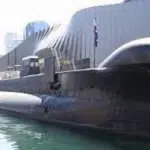
The association designed a fully integrated concept for the proposed Victorian Maritime Centre. Rather than displaying the submarine in isolation, plans called for custom hull cuts connected to the main facility via weatherproof walkways. Positioned along the Mornington Peninsula’s busy tourism corridor, the project aimed to make Otama the anchor of the region’s broader maritime heritage network.
The Loss of HMAS Otama
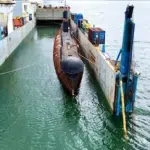
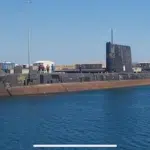
The eventual loss of HMAS Otama sparked widespread frustration across Victoria. Local advocates had envisioned the historic Oberon-class submarine as the centerpiece of a major Western Port maritime tourism hub. Following her decommissioning, the Western Port Oberon Association purchased Otama to preserve her as a museum ship. However, despite years of community advocacy and formal government meetings, the project failed to secure the state support and planning approvals required to bring her permanently ashore.
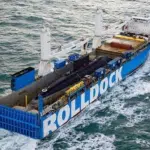
Without a land-based berth, Otama remained anchored off Hastings, exposed to harsh weather for nearly two decades. The situation reached a breaking point in 2020 when authorities offered to repurchase or remove the vessel. After severe 2021 storms further compromised her hull, Parks Victoria issued an ultimatum, requiring the association to surrender ownership to mitigate severe environmental risks.
A Devastating Regional Impact
Otama’s destruction dealt a bitter blow to the Mornington Peninsula, wiping out anticipated tourism revenue, local job creation, and a dedicated tribute space for Australian naval veterans.
Adding to public outrage, taxpayers ultimately footed a multimillion-dollar bill for emergency salvage, towing, and scrapping—a cost far exceeding early land-based installation estimates. Although the submarine is gone, advocates continue urging authorities to salvage key artifacts, such as her fin and periscopes, to create a permanent local memorial.