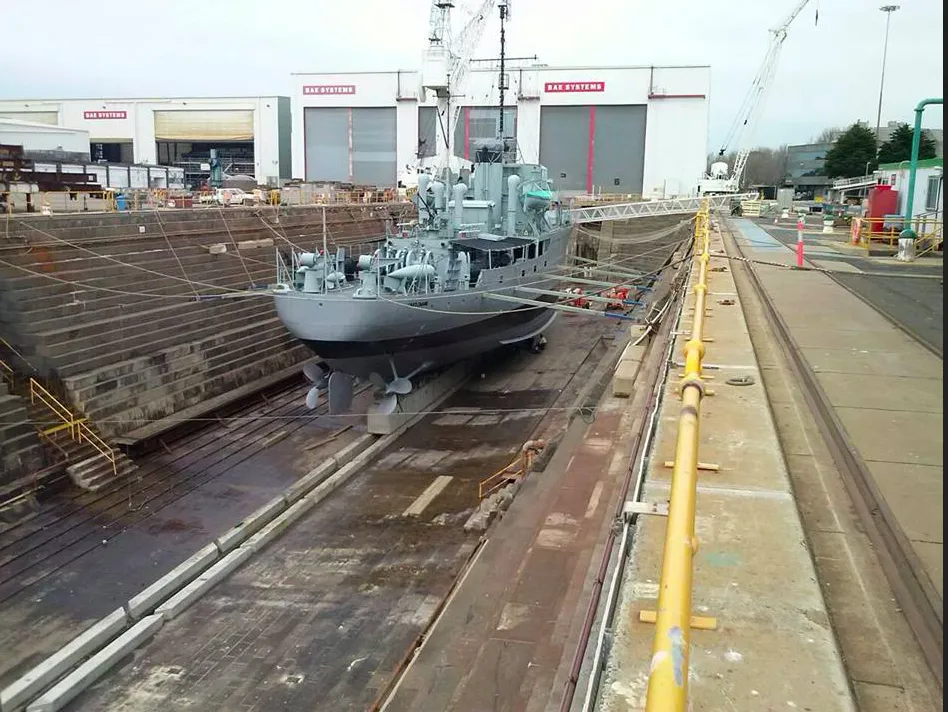
HMAS Castlemaine, a video story
HMAS Castlemaine played a vital role in protecting Australian waters during World War II, conducting patrols, escorting convoys, and engaging in anti-submarine warfare. She also participated in the New Guinea and Timor campaigns, providing support to Allied forces in the region.
After the war, Castlemaine was used as a training ship for the Royal Australian Navy Reserve until her decommissioning in 1945. She was then transferred to the Maritime Trust of Australia and underwent restoration to become a museum ship. Today, visitors can explore the ship and learn about her history and the role she played in defending Australia during wartime.
HMAS Castlemaine stands as a reminder of the bravery and sacrifice of the sailors who served on her during World War II, and is a valuable piece of Australia’s naval heritage.
HMAS Castlemaine: Guardian of Australia’s Maritime Heritage
Constructed during World War II, HMAS Castlemaine (J244) stands as a key surviving symbol of Australia’s naval defense. Specifically, as one of 60 Bathurst-class corvettes coming off shipyards between 1940 and 1944, she served as a versatile workhorse for the Royal Australian Navy (RAN). Throughout her active duty, she protected vital supply convoys while providing critical frontline support in Timor and New Guinea. Today, however, the Maritime Trust of Australia preserves her as a museum ship at Gem Pier in Williamstown, Victoria.
Construction and Design
Originally, engineers designed Bathurst-class corvettes as inexpensive Local Defence Vessels to handle escort, minesweeping, troop transport, and anti-submarine duties.
Laid Down: February 17, 1941, at Williamstown Naval Dockyard, Victoria.
Launch: August 7, 1941. However, freezing weather unexpectedly hardened the slipway grease, holding the ship fast until a tugboat finally pulled her free.
Commissioned: June 17, 1942, under the command of Lt. Cmdr. Philip J. Sullivan.
HMAS Castlemaine Specifications
Class & Type: Bathurst-class Corvette / Minesweeper
Displacement: 650 tons
Dimensions: 186 ft (56.7 m) × 31 ft (9.4 m)
Speed & Crew: 15.5 knots (28.7 km/h); 85 officers and crew
Wartime Armament: 1 × 12-pounder naval gun, Oerlikon anti-aircraft guns, depth charges
World War II Operations
East Coast Convoys: Initially, she guarded vital shipping routes between Sydney, Melbourne, and Townsville against aggressive Japanese submarines (I-21, I-27).
Top End & Timor (1942): Afterwards, she relocated to Darwin. Consequently, she faced frequent air raids while running high-risk supply and evacuation missions to Timor to support “Sparrow Force” guerrillas. For instance, during a fatal air attack on December 1, 1942, that sank her sister ship HMAS Armidale, Castlemaine successfully fought off bombers and protected the remaining force.
Survey Work (1944): As the war shifted, she mapped northern coastal waters to establish safe navigation channels for Allied warships.
Pacific Fleet & Surrender (1945): Later, she supported operations in Morotai and the Philippines. Ultimately, she witnessed the Japanese surrender in Hong Kong on August 29, 1945, cleared local minefields, and returned home after logging over 117,000 sea miles.
Post-War Service
Reserve Status: Following four years of active service, the Navy placed her into reserve status in Melbourne on December 14, 1945.
Training Ship: Subsequently, following a complete refit in 1958, tugs towed her to HMAS Cerberus, where she served as a stationary facility to train engine-room artificers and junior sailors.
Disposal: Eventually, the Navy declared her surplus in 1971.
Restoration and Heritage Legacy
Rather than sending her to the scrap yard, the Navy gifted Castlemaine to the Maritime Trust of Australia in 1973. Therefore, she returned to Williamstown, where dedicated volunteers gradually restored her steam engines, main gun, anti-aircraft mounts, and crew quarters. As a result of these efforts, Heritage Victoria added her to the Victorian Heritage Register in 2020 as the state’s last intact WWII warship.
Today, alongside HMAS Whyalla, she stands as one of only two surviving Bathurst-class corvettes. Consequently, visitors can now tour her engine room, bridge, and mess decks at Gem Pier on weekends and public holidays.